
Key Highlights
- NASA rolled the 322-foot Space Launch System rocket back to the Vehicle Assembly Building for repairs.
- Malfunctions in the helium system and earlier hydrogen leaks forced the delay.
- The Artemis II crewed lunar flyby is postponed until at least April.
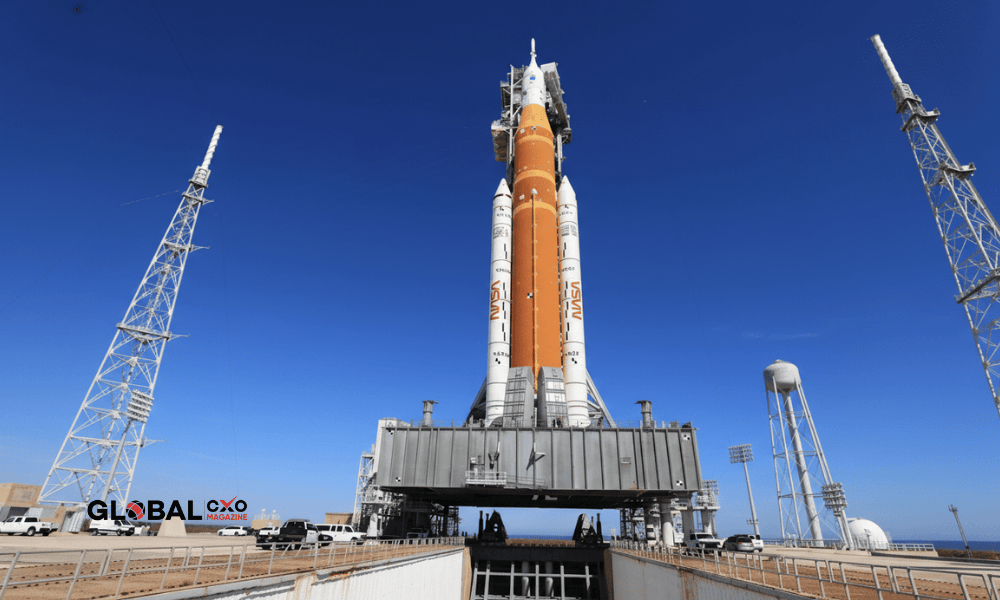
NASA moved its grounded Artemis II moon rocket off the launch pad to its hangar on Wednesday, returning it to the Vehicle Assembly Building for additional inspections and more repairs.
The slow-moving rollback, carried out by NASA’s massive crawler-transporter, covered approximately four miles and was expected to take most of the day.
The 322-foot (98-meter) Space Launch System (SLS) rocket had remained at the pad for nearly a month while engineers prepared for a potential launch window. However, a malfunction in the rocket’s helium pressurization system prompted mission managers to order the rollback over the weekend to allow technicians closer access to critical components.
Series of Delays Pushes Launch Timeline
The helium issue follows earlier complications involving hydrogen fuel leaks, which had already delayed the mission by about a month. Launch teams were targeting March for Artemis II, the first crewed lunar mission in decades, but the latest technical concerns have pushed the timeline to at least April.
Helium is essential for maintaining pressure within the rocket’s propellant tanks, ensuring fuel flows properly during launch. Any irregularities in the system require thorough inspection to prevent potential risks during liftoff.
NASA officials emphasized that safety remains the top priority, particularly for a crewed mission of this magnitude.
Mission Significance and What Comes Next
The Artemis II mission will send a four-member U.S.-Canadian crew on a lunar flyaround, testing life-support systems and spacecraft performance before a future lunar landing mission. The flight marked a major milestone in NASA’s broader Artemis program, which aims to establish a sustainable human presence on the moon and lay the groundwork for eventual missions to Mars.
With the rocket back inside the assembly building, engineers will conduct detailed diagnostics, replace or repair faulty components, and re-test systems before setting a new launch date. While delays are not uncommon in complex space missions, NASA officials maintain that resolving these issues on the ground ensures greater reliability once the rocket leaves Earth.
Despite the setback, momentum behind the Artemis program remains strong, with NASA reaffirming its commitment to returning astronauts to deep space safely and successfully.