
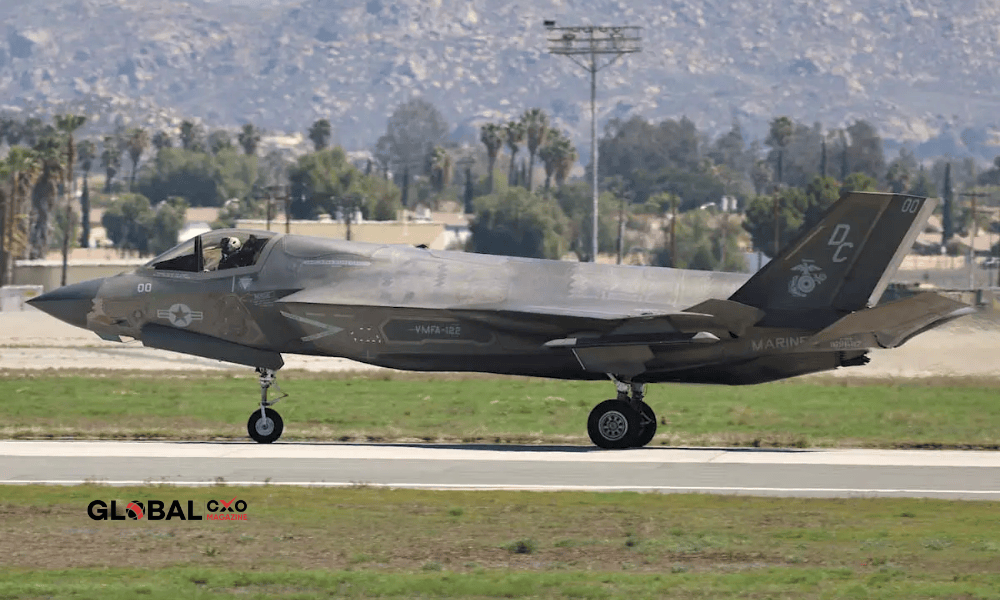
Key Highlights
- Some F-35 Lightning II jets are being delivered to the US without radar systems due to upgrade delays.
- The issue is linked to delays in the next-generation APG-85 radar under the Block 4 upgrade programme.
- These aircraft will be used for training purposes until they are fully equipped.
The delivery of frontline F-35 Lightning II fighter jets without radar systems has emerged as an unusual development in the US military programme. The issue stems from delays in the aircraft’s next-generation radar, which has created a gap between production timelines and system availability.
According to reports, a number of newly built aircraft are being handed over without one of their most critical combat components. The delay specifically affects jets intended to receive the upgraded APG-85 radar as part of the Block 4 modernisation effort.
Upgrade Mismatch Creates Production Challenge
The problem centres on the transition from the existing APG-81 radar to the more advanced APG-85 system. Aircraft in Lot 17 production were designed to accommodate the newer radar, but delays in its development mean it is not yet ready for installation.
Adding to the complexity, the APG-85 differs in size from the current system and cannot be fitted without structural modifications. Efforts are underway to redesign parts of the aircraft to allow compatibility with both radar types, but this solution may not be ready until Lot 20 production, expected around 2028.
Because of these constraints, the aircraft cannot be equipped with the older APG-81 radar either, resulting in jets being delivered without any radar system.
Temporary Measures to Maintain Airworthiness
To ensure the aircraft remain operationally viable, manufacturers have been installing ballast weights in place of the missing radar since mid-2025. This allows the jets to maintain proper balance and remain airworthy despite lacking a key system.
The issue is limited to US-bound aircraft, as export customers continue to receive jets fitted with the APG-81 radar. The newer APG-85 system has not yet been approved for export.
Production Continues Despite Limitations
Despite the challenges, production of the F-35 Lightning II is continuing. Maintaining production momentum is considered critical, as halting the assembly line could have wider industrial and financial consequences.
The radar-less aircraft will not be used in combat roles. Instead, they will support training and fleet readiness until they can be upgraded with the APG-85 system. This approach mirrors previous programme phases, such as the Technology Refresh 3 upgrade, where aircraft were delivered in a limited configuration and later upgraded.
Limited Operational Impact Expected
The absence of radar does not affect the aircraft’s basic flight capabilities. These jets remain fully flyable and safe to operate in controlled environments, enabling their use for pilot training.
In practice, a portion of military aircraft fleets is often dedicated to non-combat roles. For example, some F-22 Raptor aircraft are used primarily for training rather than operational missions.
Read more news on Aerospace.